The Ontario Building Code references CSA geotechnical standards that require accurate in-situ permeability data before approving dewatering plans or permanent drainage systems. Vaughan’s growth along the Highway 400 corridor has pushed development onto the Oak Ridges Moraine and into the Humber River valley, where groundwater conditions shift dramatically within a single lot. We run Lefranc tests in soil boreholes and Lugeon tests in bedrock to get hydraulic conductivity values that lab tests alone cannot offer. A CPT test can map stratigraphy continuously, but the direct water injection or withdrawal during a permeability test gives the design team the real flow rate through the formation.
A single Lefranc test in the right soil layer replaces a dozen empirical assumptions in the dewatering plan.
Service characteristics in Vaughan
Local geotechnical conditions in Vaughan
Vaughan transformed from a rural township into a city of over 320,000 in three decades, and the pace of basement excavation and underground parking construction has far outpaced regional groundwater mapping. The risk shows up when a dewatering system designed from textbook values fails to lower the water table below the footing elevation, causing boils, base heave, or silt transport into the excavation. A properly executed permeability test on the actual site tells the contractor exactly how many well points are needed, what pump capacity to install, and how far the drawdown cone will extend. Without that data, the project carries groundwater risk that no amount of concrete can fix after the fact. We see this most often where the Thornhill aquifer interacts with fractured shale.
Our services
Our field permeability program covers the two standard methods required by Ontario hydrogeological reports and dewatering permit applications.
Lefranc variable-head test
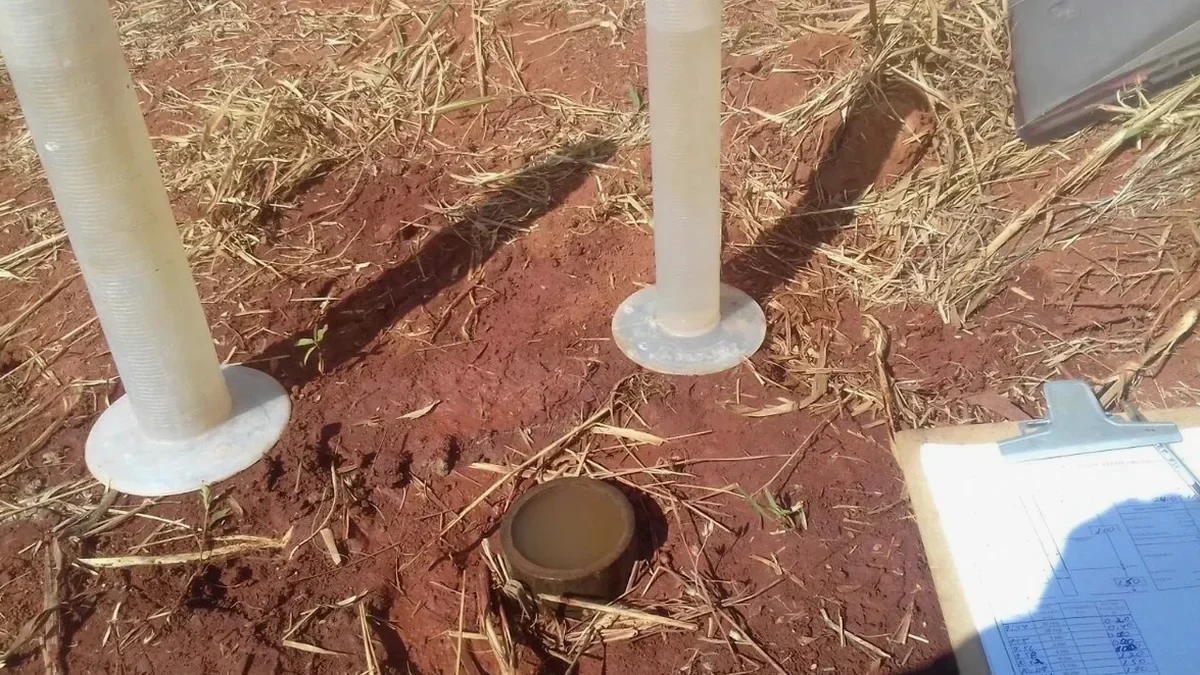
Performed in soil boreholes at target depths identified from the stratigraphic log. We use a slotted standpipe or open casing section, introduce a known water volume, and record the water level decline over time. The hydraulic conductivity is calculated from the recovery curve using the Hvorslev shape factor.
Lugeon constant-pressure test
Applied in bedrock intervals isolated by pneumatic packers. Water is injected at stepped pressures (typically 5 stages) while flow rate is measured. The resulting Lugeon value indicates fracture permeability and guides grouting decisions for cut-and-cover tunnels or deep shafts.
Combined permeability and monitoring
Where the project requires long-term groundwater data, we install vibrating wire piezometers in the test borehole after permeability testing. This gives both the initial k-value and the seasonal fluctuation curve needed for permanent drainage design under CSA guidelines.
Top questions
What does a field permeability test cost in Vaughan?
A single Lefranc or Lugeon test, including the borehole preparation, packer setup, field data collection, and the calculation report, ranges from CA$890 to CA$1.290. The final figure depends on the test depth, the number of intervals tested in one borehole, and whether we need to install a piezometer afterward.
How many test intervals do I need for a dewatering permit application?
The TRCA and local conservation authorities typically expect at least one permeability measurement per distinct hydrostratigraphic unit encountered on the site. If the borehole passes through a perched sand lens, a regional aquifer, and fractured bedrock, that means three separate tests at different depths.
How long does a Lefranc test take in the field?
Once the borehole is advanced to the test depth and the casing or packer is set, the actual measurement phase takes 30 to 90 minutes per interval. Low-permeability silty soils require longer observation to get a reliable recovery curve. We plan for half a day per borehole with two or three test zones.
Can I use lab permeability results instead of a field test?
Lab tests on remolded or even undisturbed samples do not capture the effect of fissures, root holes, sand lenses, or fracture networks that control real groundwater flow. The Ontario Building Code and most municipal reviewers in Vaughan require at least one in-situ test per major soil or rock unit for any project involving permanent dewatering or deep excavation.